
There’s a moment that happens in most Homewood showrooms. Someone sits down, runs a hand along the seat of a chair, and asks: what is this? The answer is weave, and it’s one of the more personal decisions you’ll make when designing a Homewood piece. Not because it’s complicated, but because it’s yours. Every rope colour, every pattern, every combination is chosen by you for a specific piece made specifically for you. This guide is here to make that choice easier.
What is weave at Homewood?
Weave is a customisation option, not a separate range. When you order a handcrafted wooden chair, bench, or occasional piece from Homewood, you can choose to incorporate rope weaving into the design, selecting your pattern, your rope colour, and how it sits alongside your chosen timber and finish. No two combinations are identical, which is true of every Homewood piece, but particularly true of anything with weave.
The rope is made locally. Homewood works with manufacturers in Johannesburg, the KZN Midlands, and the Cape who produce rope to specification. Cotton rope is locally sourced. Jute comes from India. Polyester yarn is imported but woven locally. Quality and proximity, in that order.
The weave patterns
Homewood offers a range of weave patterns, each with its own construction, character, and best use. Choosing between them is less about which is objectively better and more about which one belongs in your space. Every pattern has been developed, tested, and refined, either from age-old tradition or in-house at the Lidgetton factory.
The traditional Danish weave
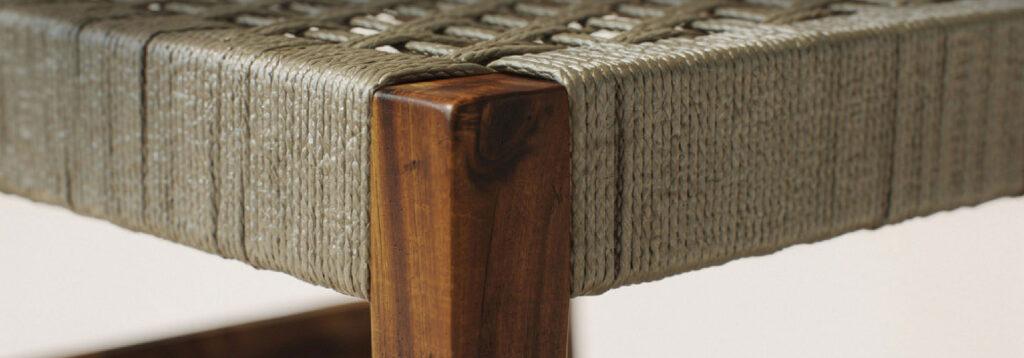
This uses Danish nails and follows a technique that craftspeople around the world have used for generations. It is strong, firm, and designed to hold up under daily use, making it ideal for chair seats and frequently used pieces. Of all the patterns Homewood produces, this is the one with the deepest craft lineage.
The classic wrap weave
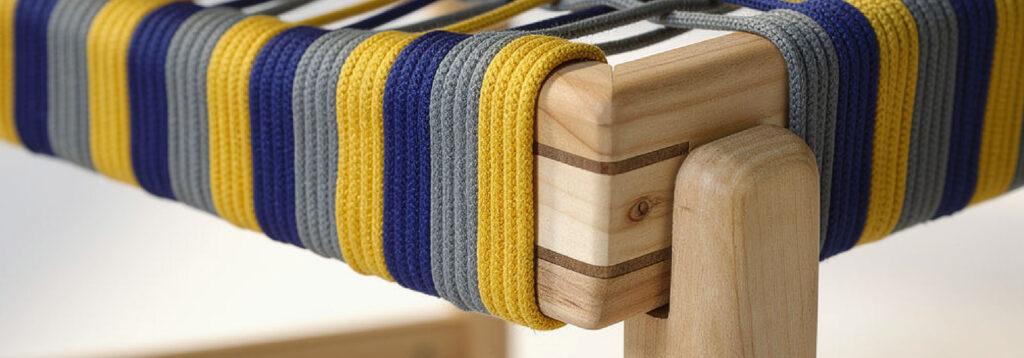
The wrap weave draws from traditional rope and macramé knotting, the kind of pattern found across West African and South American craft traditions. It can be achieved using either 5mm or 8mm rope, and the choice of thickness changes the character of the piece. The open lattice construction creates shadow play that shifts across the day, which means the piece looks different at midday than it does in the late afternoon.
The Imbiza weave
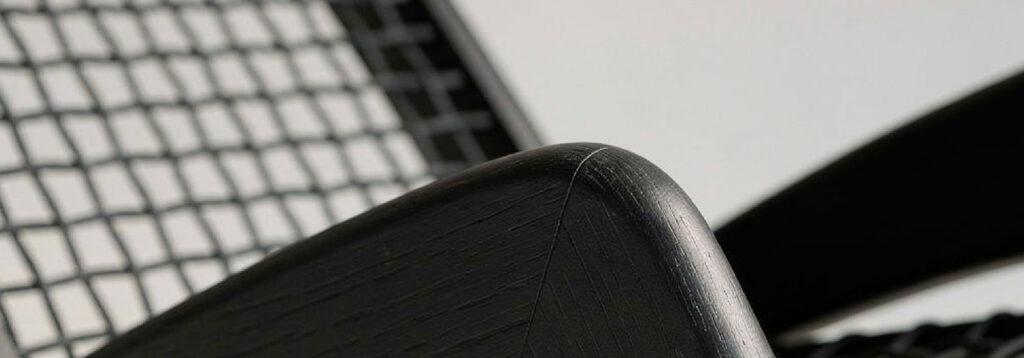
This draws from the curves of the traditional Zulu pot. That design language runs through the whole Imbiza range and gives the weave its distinctive shape, one that Homewood customers tend to return to. Warm, familiar, and grounded in something older.
The Cotswold weave
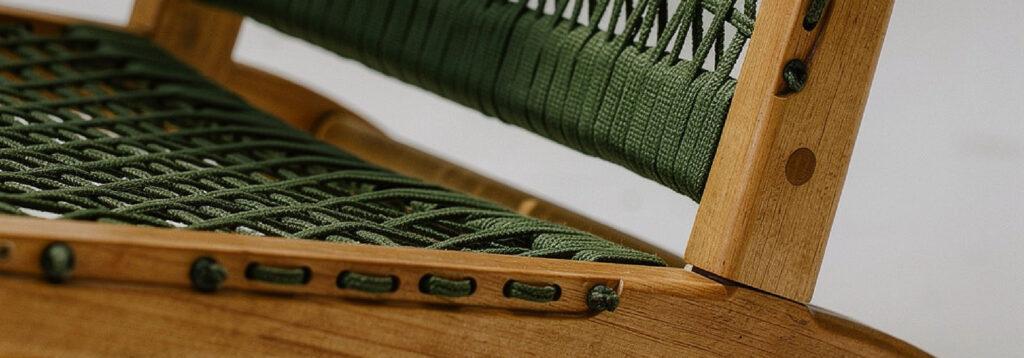
A thin 5mm rope is threaded in a shoelace-style pattern along the sides of the seat, while the front and back surfaces are cleanly wrapped. The result is refined and considered, the kind of weave that rewards a closer look without demanding one. If you’re drawn to something quieter that lets the timber carry the piece, the Cotswold is usually the right choice.
The Ndebele weave
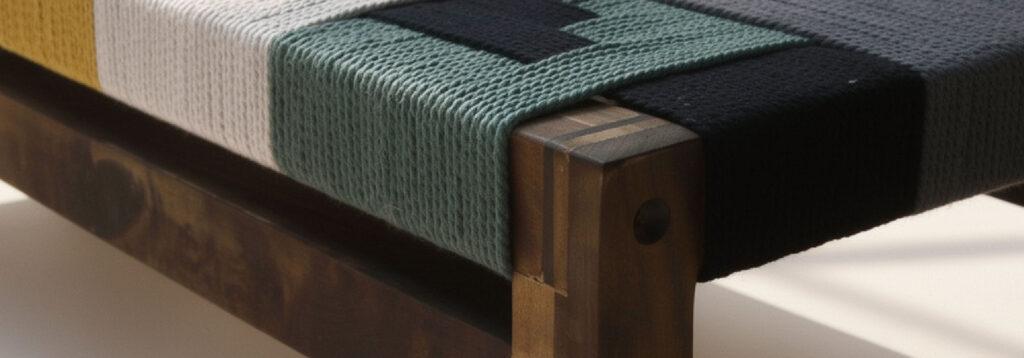
This dynamic pattern holds character with deliberate patchwork that allows for exploration of colour combinations. With a trendy and contemporary feel, there’s still noticeable sparks of heritage, whether it’s resonance with bold and geometric shapes in Ndebele art or the striking Kente cloth from Ghana.
Rope colours
Neutral rope colours are always the most ordered. Olive, beige, grey, and black account for most of what leaves the factory. They sit quietly against the timber and let the wood do the talking.
Blues are particularly popular at the moment and bring a coastal quality into a space. Beyond that, customers occasionally go further. There have been orders in bright green and lumo orange. If you want a colour pop, the option is there.
One honest note from the factory floor: not every colour combination works. The Homewood team will tell you if something is likely to clash. They’ve seen enough combinations to know, and they’re always happy to make a recommendation.
How the weaving is done
Every piece of weave that leaves the Homewood factory is done by hand. Around 70% of the weaving team is female, recruited locally from the Lidgetton area and trained in-house. Most come in with no prior experience. The skill is taught at the factory, pattern by pattern, rope by rope. What you’re running your hand across in the showroom is the result of that training.
Handcrafted wooden furniture is only as good as the hands that finish it. The timber can be sustainably sourced and precisely machined, but the weave is entirely human. There’s no shortcut to getting it right, and Homewood doesn’t look for one.
Caring for your woven piece
Rope weave is more straightforward to care for than most people expect.
A soft brush or dry cloth handles routine upkeep. For surface marks, a damp cloth with mild soapy water does the job. Wipe along the rope rather than across it and allow the piece to dry naturally. Don’t soak the rope or leave it sitting wet.
Stains are best dealt with quickly. Blot rather than rub, because rubbing pushes the stain deeper into the rope fibres. Avoid bleach, harsh chemical cleaners, and anything solvent-based.
We always advise our customers at Homewood that quiet and regular maintenance is always better than leaving it without care for long periods of time.
Introduce something new into the space
At Homewood, the most interesting projects usually start with a creative challenge and the same applies to our weave patterns.
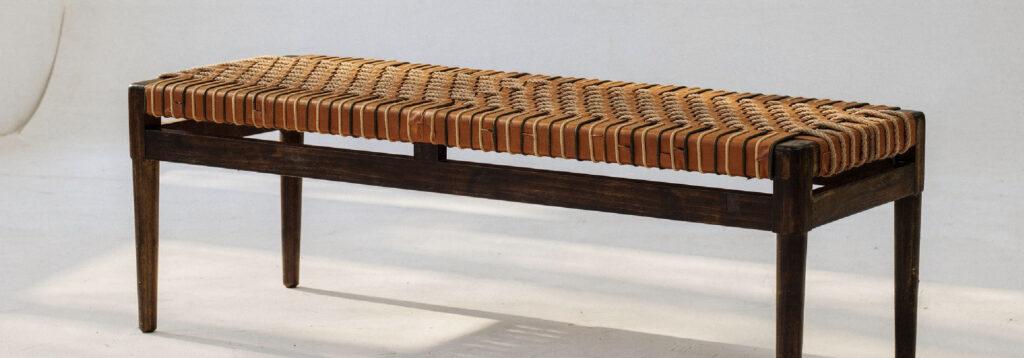
The Kisondo range carries its own custom weave built around a repeating dhow motif, creating something close to a traditional birdcage effect. We are currently working with a leather couch manufacturer to find a use for the offcuts their production generates, material that would otherwise be discarded, stripping those offcuts into workable pieces and weave them alongside polyester rope, cotton, eco-rope, and jute to create something that has never come off our factory floor before.
Most patterns are developed in-house at the Lidgetton factory, and each reflects a specific design language rather than a generic texture. If you have a project, a material, or an idea you’re not sure is possible, we would love to hear it. That is usually where the best work begins.
Ready to choose?
Weave is one of those details that rewards the decision. It changes how a piece feels to sit in, how it reads in a room, and if you’ve chosen well, it becomes something you stop noticing because it simply belongs there.
The best way to choose a pattern and rope colour is to see them in person. Our showroom teams carry samples and can walk you through what works for your piece and your space.
Woven Furniture