
If you’re watching the grey skies roll in over the coast, you already know what’s coming. That persistent, creeping damp that finds its way into everything.
Meanwhile, inland, it’s a completely different story. The Highveld is bracing for bone-dry, crisp winter days where the air actively pulls moisture out of everything, your skin, the earth, and yes, your favourite solid wood furniture too.
Ian, founder of Homewood, has spent over 20 years working with solid wood, understanding how it behaves, how it ages, and what it needs to last. Every tip in this guide comes directly from that experience. Whether you’re dealing with the wet or the dry, a few proactive steps right now means you won’t be staring down the barrel of avoidable damage come spring.
Why Wood Responds to the Seasons
Here’s the thing about solid wood: it’s alive. Even after it’s been beautifully crafted into a dining table or an outdoor patio set, it remembers its roots.
It breathes, it reacts to its environment, and it carries natural compounds, quinones, tannins and extractives, that constantly interact with moisture and sunlight. Think of lignin as the structural glue keeping the timber strong. When heavy rain gradually draws out the wood’s natural pigments, and harsh UV rays break down that lignin, you get that familiar silver-grey weathered look.
“It’s not a manufacturing flaw,” Ian says. “It’s just nature doing its thing.”
If you prefer for your furniture to keep its rich, original lustre, you can significantly slow this process down. The secret? The right maintenance, applied at the exact right time. And that time is right now.
Preparing Outdoor Furniture for a Wet Winter (Cape & KZN Coast)
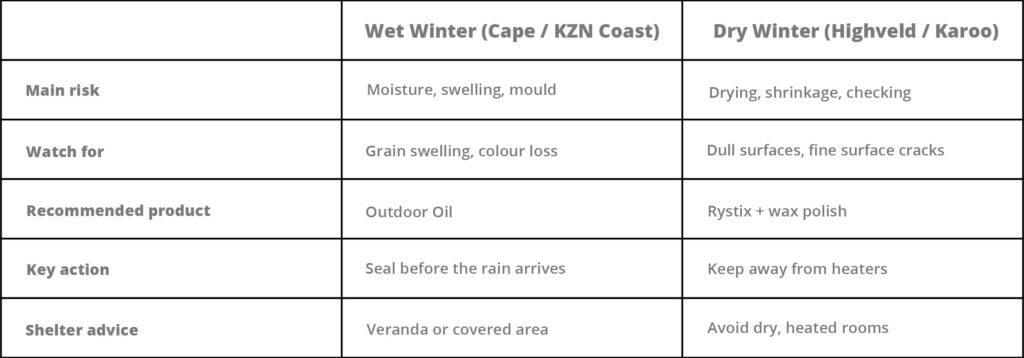
If you’re living along the coastline or heading into a notoriously wet winter, moisture is enemy number one. Constant dampness doesn’t just sit on the surface, it seeps into the grain, inviting mould, rot, and structural warping to the party.
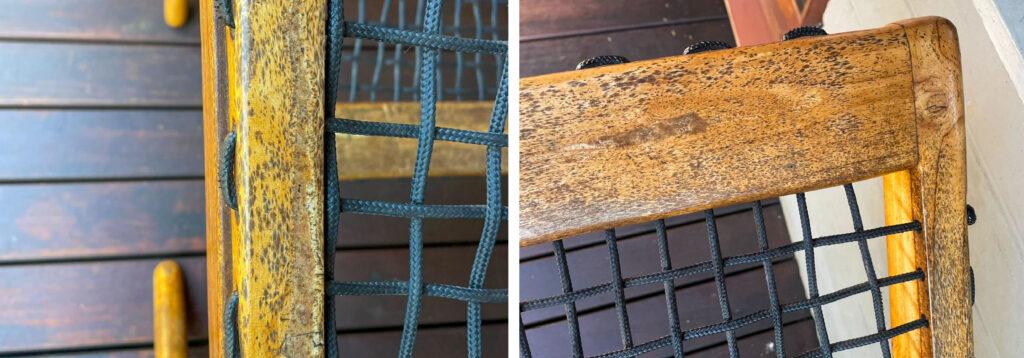
The goal is simple: create a barrier before the heavens open.
- The Deep Clean: Before applying any protective layer, your furniture needs to be bone dry and free of dirt. Give it a gentle wipe-down and let it dry completely in a shaded spot.
- The Treatment: For outdoor pieces facing the elements, you need serious protection. Apply a fresh coat of outdoor oil while conditions are still workable, rub it on with a clean rag, wipe off the excess within ten minutes, and let it dry completely before the weather turns. If the surface looks thirsty, give it two coats. The oil nourishes and seals the wood from the inside out.
- The Application: Apply evenly, following the direction of the grain. Don’t skimp on the end grains, the edges of the wood act like straws, sucking up moisture faster than any other part of the piece. Our Outdoor Oil maintenance guide and quick-reference infographic walk you through every step.
- Where possible, bring pieces under a covered veranda or roof for the worst of the season. A little shelter always goes a long way.
Prepping for the Highveld Dry: Indoor & Outdoor Care
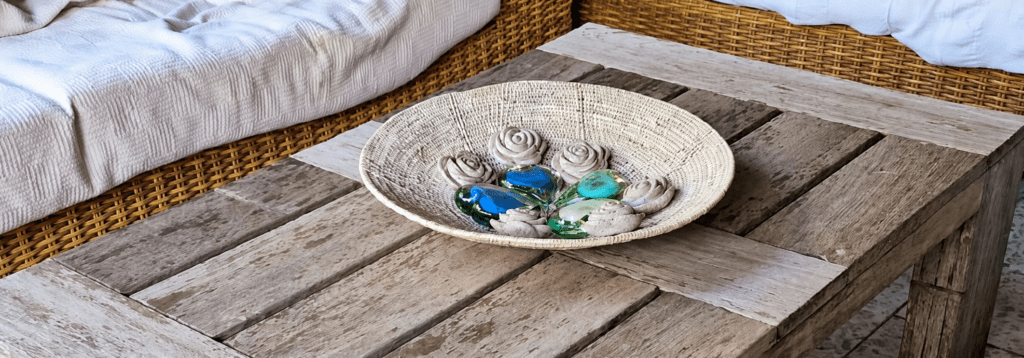
If your winter involves crisp, clear days and zero humidity, you have the exact opposite problem. The dry air acts like a sponge, thirstily drawing moisture out of your wood. When solid wood dries out too fast, it shrinks (leading to the fine surface cracks known as checking) and eventually splitting.
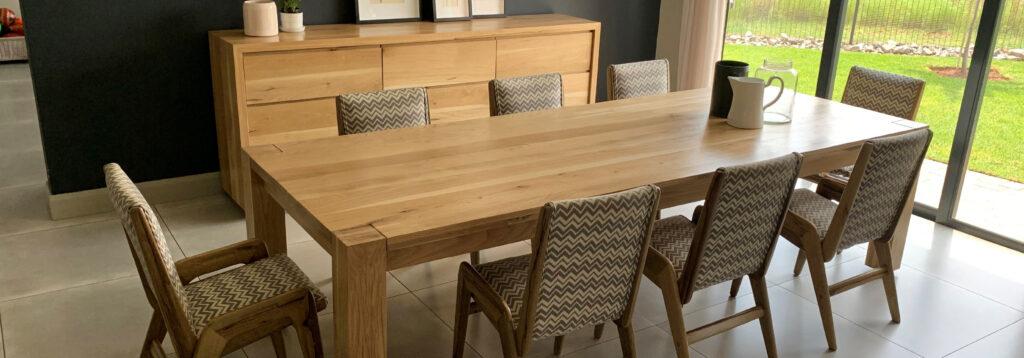
Indoor furniture isn’t safe either. In Ian’s experience, placing a beautiful wooden dining table next to a roaring fireplace or a blasting underfloor heating vent is one of the most common (and most avoidable) mistakes he sees.
- Hydration is Key: Just like your skin needs a heavier moisturiser in winter, your furniture needs a rich, nourishing treatment. For pieces on a Rystix finish, a wax-based polish like Mr Min will restore the sheen and keep the timber supple against the dry air. Always avoid ammonia or caustic cleaners, they’ll damage the coating and undo what the finish is working hard to protect.
- Positioning Matters: Keep solid wood pieces a safe distance from direct heat sources. If you’re running indoor heating constantly, consider a humidifier to keep the ambient air at a level your furniture (and your lungs) will appreciate.
Our Rystix maintenance guide covers everything you need for dry-season care.
Not Sure What Your Piece Needs?
Solid wood furniture is an investment in your home’s character. Built to last for generations, but it relies on you to give it a fighting chance against the elements.
Oil your outdoor furniture now, before winter, not after. Pieces left unprotected through the cold months arrive at spring in a far worse state than they need to. By the time the damage is visible, some of it is irreversible.
Spending an afternoon checking, cleaning, and treating your pieces right now will save you hours of sanding and restoration work when the weather turns.
“A little love in early goes a long way,” Ian says. “Spending an afternoon on it now will save you hours of restoration work when the weather turns.”
Not Sure What Your Piece Needs?
Every Homewood piece is made from sustainably sourced hardwood, handcrafted to last a lifetime, but that longevity depends on a little seasonal care. If you’re unsure what finish your furniture has or which products to use, our team at any Homewood showroom can advise you and make sure you leave with exactly what you need.
You can also explore our full range of outdoor furniture and indoor furniture, or read more about the wood we work with and why it behaves the way it does.
Your furniture was built to last. Let’s make sure it does.
About Ian Perry
Founder and director of Homewood, one of South Africa’s leading handcrafted solid wood furniture makers. With over 20 years in the industry, Ian brings a deep understanding of wood as a living material, how it behaves, how it ages, and how to care for it properly.